Bandon Dunes
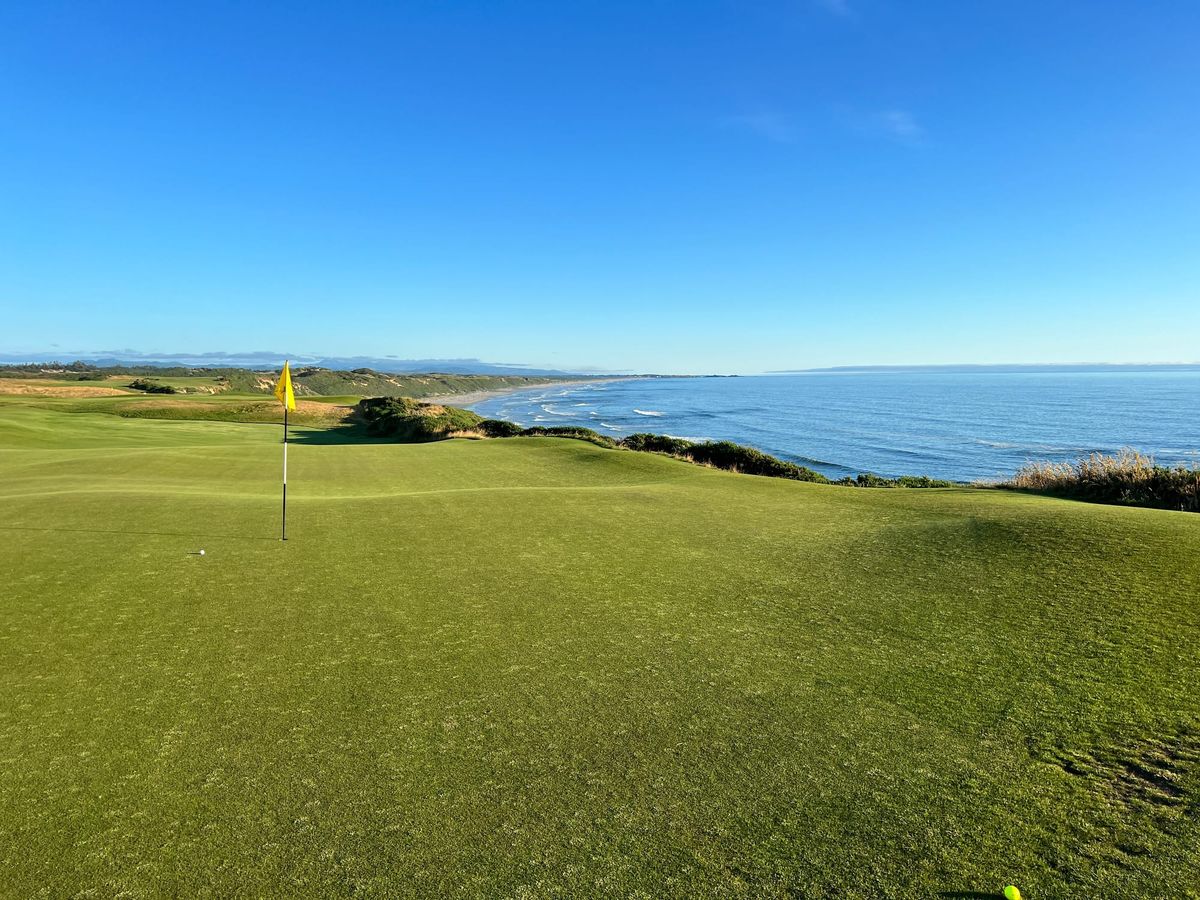
In 1994, a Chicago greeting-card executive named Mike Keiser stood on a remote stretch of southern Oregon coastline and decided to build a links course there. He had never developed a resort. The land was two hours from the nearest interstate and three hours from the nearest major airport. His own consultants told him the math wouldn't work. Twenty-five years later, Bandon Dunes is the most-discussed golf destination in America, and arguably the most consequential American golf project of the last half century.
The story of how that happened, and how it has unfolded into five 18-hole courses, two par-3 layouts, and a putting course, is one of the great recent chapters in the game. But as the resort has grown more popular and the booking process has shifted to a lottery system, the practical questions like "What's it actually like to plan, book, and play this place?" have gotten harder to answer.
This guide is about the real version: updated pricing, the lottery rules, lodging tradeoffs, transportation logistics (they're serious), and the considered case for which courses to play in which order.
Some of what you've heard is true. The walks are long. The weather is real and can change on a dime. The food is genuinely good. The service is, by every account, the most enjoyable of any American golf resort. And there is no version of a Bandon trip that doesn't end with a buddy of yours on the flight home saying he's already started planning the next one. Post-Bandon longing is a real thing, and you should prepare to be in a funk for a few days after returning home as you digest what you just saw.
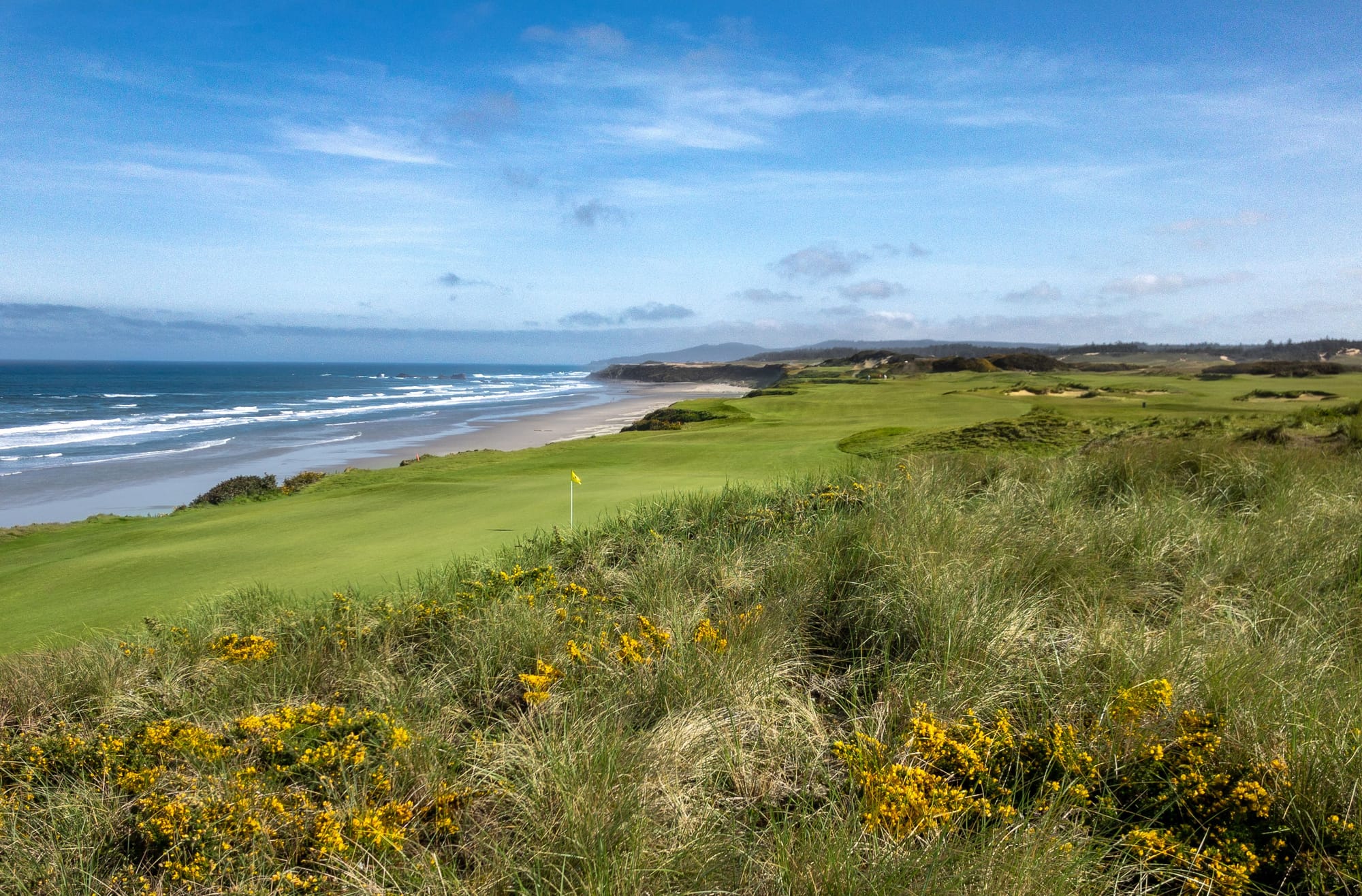
The Courses
Five full 18-hole courses sit on the property, plus the 13-hole par-3 Bandon Preserve, the 19-hole par-3 Shorty's, and the Punchbowl putting course. All five 18-hole courses currently sit inside the top 20 of America's Top 100 Public Courses by Golfweek. There is no other resort on earth where the worst course on property would still be the best course in most American states.
Each layout is the work of a different generational architect, David McLay Kidd, Tom Doak, Bill Coore and Ben Crenshaw, and the routings could not feel less alike. What unites them is a stripped-down design philosophy: native turf, almost no mowing patterns, no real estate built into the courses, no carts, and minimal earthmoving. Keiser called it "golf as it was meant to be."
The architects took him at his word.
Bandon Dunes
David McLay Kidd, 1999
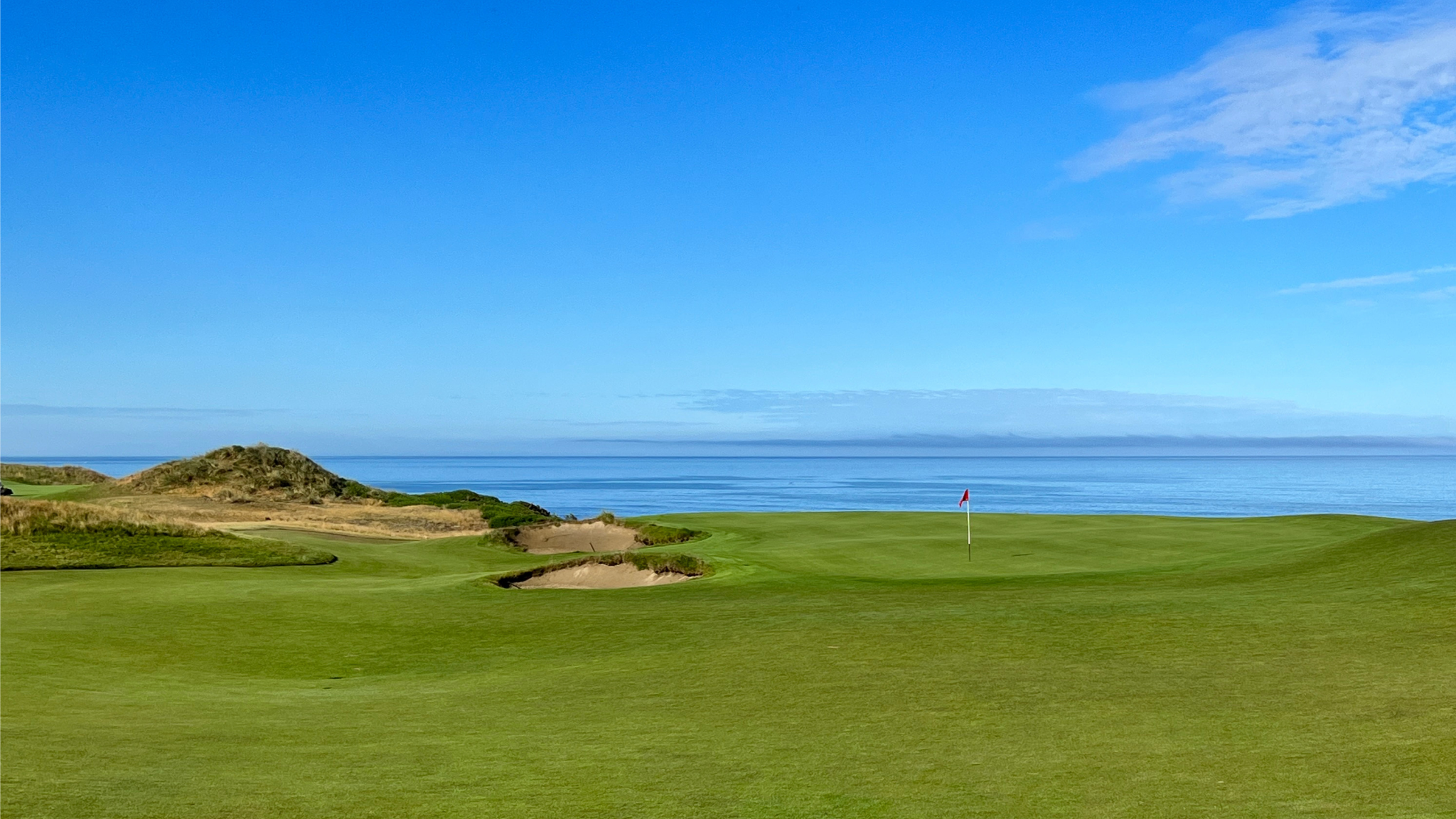
The course that started it all. Generous landing areas, mildly undulating greens, and the most photogenic stretch on property, holes 4 through 6 along the cliffs. Often where guests post their lowest scores.
Pacific Dunes
Tom Doak, 2001
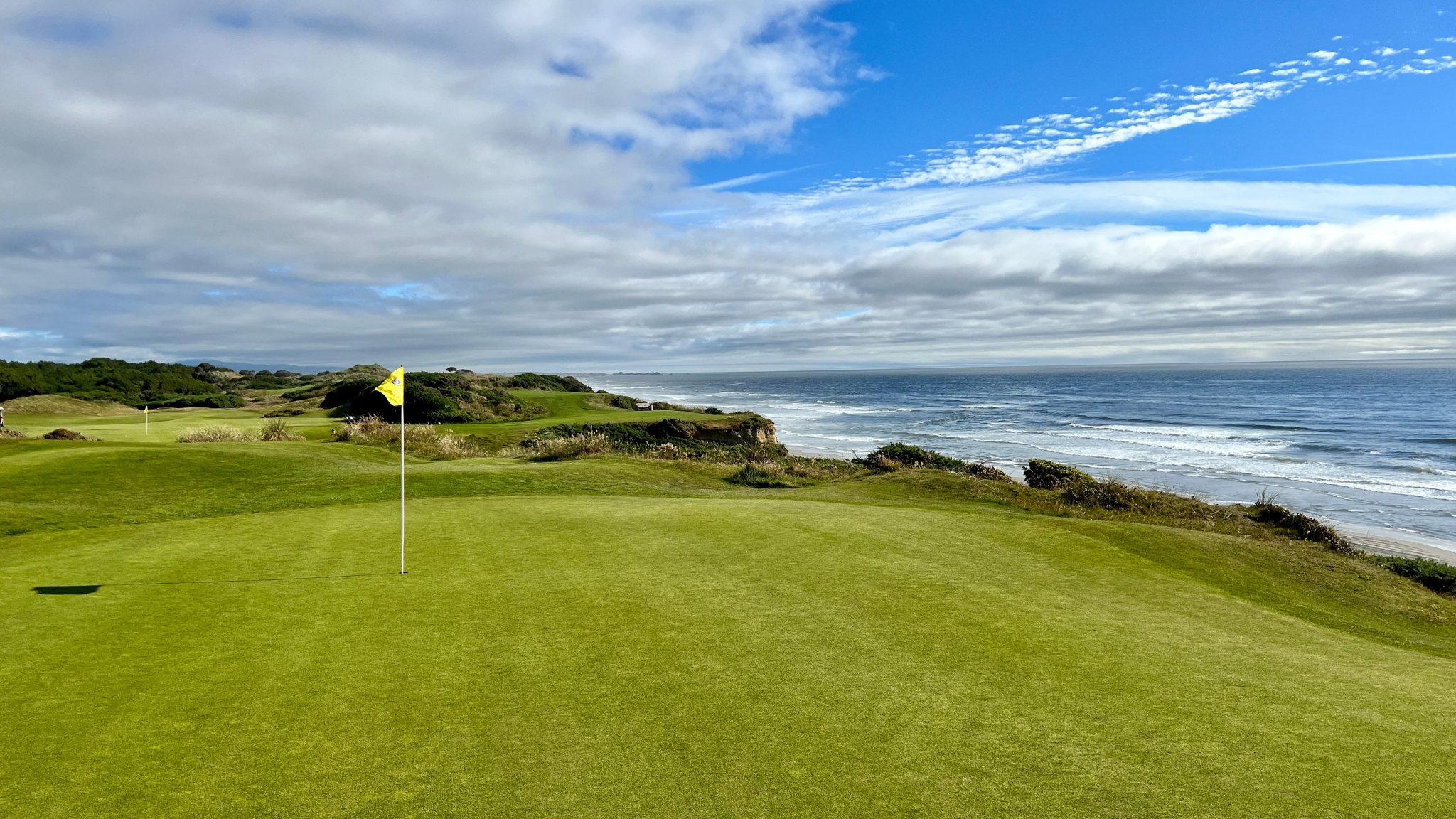
Often ranked the best public course in America. An unconventional par 71 with one par-3 and one par-5 on the front nine and four par-3s on the back. Two of the finest coastal par-4s in the world (4 and 13). Will test every aspect of your game.
Bandon Dunes
David McLay Kidd, 1999
The course that started it all. Generous landing areas, mildly undulating greens, and the most photogenic stretch on property, holes 4 through 6 along the cliffs. Often where guests post their lowest scores.
Bandon Dunes
David McLay Kidd, 1999
The course that started it all. Generous landing areas, mildly undulating greens, and the most photogenic stretch on property, holes 4 through 6 along the cliffs. Often where guests post their lowest scores.
Bandon Dunes
David McLay Kidd, 1999
The course that started it all. Generous landing areas, mildly undulating greens, and the most photogenic stretch on property, holes 4 through 6 along the cliffs. Often where guests post their lowest scores.
A note on rankings. Course rankings at Bandon are notoriously unstable. Every visitor leaves with a different order, and the experienced visitors change theirs each trip. The Fire Pit Collective previously polled their staff and produced five distinct top-fives, with all five mainline courses appearing at #1 on at least one list. Take any ranking as a starting point, not a definite.
The Bandon Experience
The thing the photos cannot communicate about Bandon Dunes is the scale. Bandon is a sprawling, mostly forested coastal landscape that plays in and out of massive windswept dunes. The drive from Sheep Ranch on the north end to Bandon Trails on the south end takes a real ten minutes. Walking the resort, even between adjacent lodgings, can mean a half-mile through pine forest.
This sprawl is intentional. Keiser built Bandon as a refuge from the country-club aesthetic; no real estate, no roads cutting through fairways, no homes peeking over the dunes. You park your car when you arrive and never need it again. The resort runs an on-demand shuttle service that materializes within minutes of your phone call, and that shuttle becomes the connective tissue of the trip. Caddie to range to first tee to dinner to lodging, all on the same fleet of black vans driven by genuinely friendly Oregonians who have been there for years.
The walks are long because the courses are walking-only — there is no cart option on any of the five 18-hole layouts. Bandon Dunes, the original course, runs about 5.5 miles tee to home. Pacific Dunes is closer to 6.5. Most golfers report 20,000–25,000 steps per 18 holes. A 36-hole day, common in peak season, is genuinely athletic. Pack your softer spikes, train a little before you go, and consider an afternoon massage to recover.
"Playing golf in an open field of fescue overhanging the Pacific… When I take a shallow divot from a half-swing 6-iron, I want sand to fly up, not soil."
- Colt Knedler, Fire Pit Collective
Wind is the variable that defines the experience. The big fan blows here almost every day (locals describe a 20 mph day as average) and the courses were routed to take advantage of it rather than shelter you from it.
A morning round at Pacific Dunes in 12 mph wind is one game; the same course in the afternoon with 25 mph gusts off the water is a different sport entirely. Embrace it. Throw out the yardage book and play punch shots, knockdowns, and half-9-irons. The kinds of shots American golfers rarely use at home become the only currency that works here.
Pacific Dunes, Holes 10 & 11, Back-to-Back Par 3s
Architectural Highlight
Doak built the only example in modern American golf of consecutive par-3s along an ocean cliff, and the back nine of Pacific Dunes opens with the experiment. The 10th plays roughly 200 yards along the bluff line, the green tilting away toward the water. The 11th is the shorter play, 145 yards over a sandy waste, the green falling off on three sides. From the upper tee box on 10, you can see the entire coastline curving south. Most first-time visitors describe this stretch as the moment they understood why people fly to Oregon to play golf. It is the architectural counterargument to the rule that par-3s shouldn't run consecutively.
Booking and Pricing
The biggest change for 2026 is the booking system. After years of phone-based first-come-first-served reservations producing brutal hold times, Bandon moved to a lottery model. The year is divided into three reservation windows. For each window, golfers submit an entry online during a registration period, no purchase required, no commitment. After the window closes, the resort runs a random drawing to determine the order in which they process bookings.
If your entry is drawn, you'll receive an email letting you know your place in line. The earlier the draw position, the wider the menu of available dates and courses. Late draws still get rounds, but flexibility narrows. The system is meaningfully fairer than the old model, but it also means trip planning now has a built-in delay between "we want to go" and "we have tee times."
/